.svg)
.svg)
.svg)


Stopcock location: how to find and use your main stop tap
A straightforward guide to finding and safely using your main stop tap before a small leak becomes a big problem.
When water starts pouring from a burst pipe or leaking appliance, knowing exactly where your main stop tap is can save you thousands in damage. A few minutes spent finding and testing your stopcock now makes all the difference in an emergency.
What your main stopcock is and how it looks
Your main stopcock, sometimes called the stop tap, is the valve that controls the incoming cold water supply to your home. Turn it off and you shut off most of the water feeding your pipes and appliances.
In most Kent homes it will look like one of the following:
- Traditional wheel valve – brass or copper pipe with a round, ridged wheel handle you turn by hand
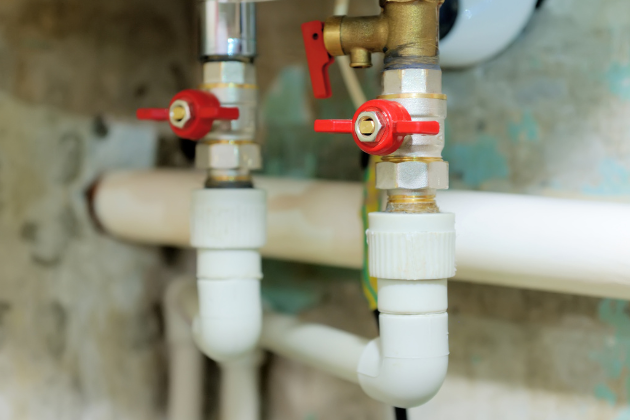
- Lever valve – a coloured lever (often red, blue or yellow) on a copper or plastic pipe that you turn a quarter turn
- Plastic service valve – near a modern plastic water main, sometimes with an integrated blue or black key-operated head
On a wheel type, turning clockwise usually closes it, and anti-clockwise opens it. On a lever valve, the handle in line with the pipe is normally open, and across the pipe is closed.
Common places to find the stopcock in Kent homes
Most properties in Kent follow similar layouts, which helps narrow down the search. Your stop tap will nearly always be where the mains water first enters the building, then it feeds the rest of the pipework.
Typical locations in houses and bungalows include:
Under the kitchen sink: This is the most common spot in older and newer homes. Look at the back of the cupboard, often low down where the cold pipe comes through the wall or floor.
Utility or laundry room: If your washing machine is in a separate room, check low on the wall, near the back of appliances, or close to an external wall.
Hallway cupboard: Many Kent properties, especially 1960s – 1990s builds, have a stopcock in the cupboard that also houses the electric meter or consumer unit.
Near the water meter: If your meter is indoors, the stopcock is usually within arm's reach, sometimes below a plastic cover in the floor or just above the meter on the pipe.
Flats and apartments
In flats, the layout can be more confusing. Your individual stop tap might be:
Inside your flat, often in a kitchen cupboard, near the boiler, or in a small internal service cupboard.
In a communal cupboard on the landing, in the stairwell, or in a riser cupboard shared with neighbours. Each flat should have a labelled valve.
If you cannot find any valve in your property, check your welcome pack from the managing agent, or ask the building manager where your individual and communal isolation valves are located.
How to test your stopcock safely
Once you have found the stop tap, it is important to know it actually works before you need it in a hurry. Choose a time when you are not using appliances and everyone at home knows you are doing a quick test.
Follow this simple checklist:
- Find it – locate the main stopcock and clear easy access around it
- Test it – gently turn it off and on, checking a cold tap to confirm it works
- Label it – add a clear label so anyone in the home can spot it fast
To test, turn a cold tap on slightly, then slowly close the stopcock. The flow should reduce and stop within a few seconds. Turn the stopcock back on gently, then run the tap until the flow is normal again.
Dealing with stiff or old stop taps
If your stopcock has not been touched for years, it may feel stiff. The golden rule is never to force it, as you risk snapping the spindle or causing a leak around the gland nut.
Try these steps first:
Use gentle, gradual pressure with your hand only, rocking the handle a few millimetres back and forth before attempting a full turn.
If it starts to move, do not wind it all the way from fully open to fully closed in one go. Work it part way, then back slightly, repeating until it turns more freely.
A light application of suitable plumbing lubricant on the spindle can help, but avoid soaking the area in oil and never use a blowtorch or heat on plastic or older soldered joints.
If it will not budge, or if you can see any weeping or corrosion, stop and contact a professional. Forcing an old valve can leave you with a sudden leak in a very awkward place.
Using appliance valves instead of the main stopcock
Not every issue needs the whole house water off. Many modern homes have isolation valves on individual appliances and fixtures so you can work locally without affecting everything.
Look for small inline valves with a slot for a screwdriver, or mini levers, on the pipes feeding:
Toilets, taps, washing machines, dishwashers and boilers often have their own isolation points. Turning these by a quarter turn usually shuts off just that appliance.
Your main stopcock controls the incoming cold feed to the entire property, whereas appliance valves control branches off that main supply. In a serious leak or burst, go straight to the main stop tap. For a slow drip from a tap or a faulty washing machine hose, isolating that appliance first is often enough.
What to do if the stopcock will not fully shut off
Sometimes an older or partially seized valve will only reduce the flow rather than stopping it completely. You may still have a strong trickle from taps even when it seems fully off.
In this situation, take immediate steps to limit damage. Shut off any appliance valves feeding the area of the leak, move belongings away from the water, and use towels or buckets to contain drips.
If your external boundary stop tap in the pavement is accessible and you know how to use it, you may be able to shut the supply off there. This valve may belong to the water company, so use care and do not force it.
If water continues to flow or you are not confident working with valves, call an emergency plumber as soon as possible. A professional can isolate the supply safely and replace or repair faulty stopcocks and service valves.
Stay prepared and get professional help when needed
Taking ten minutes today to find, test and label your stopcock gives you valuable control in an emergency. Make sure everyone in the household knows where it is and how to turn it off calmly and safely.
If your stop tap is stiff, leaking, awkward to reach, or does not shut off fully, it is well worth having it inspected and upgraded before a problem strikes. Modern valves are more reliable and easier to operate in a hurry.
For friendly advice, emergency plumbing support or professional valve repairs and replacements in Kent, contact Pro Plumbers on 01732444555. Having a reliable main stopcock is one of the simplest ways to protect your home from serious water damage.