Blog
Boiler Losing Pressure: Causes, Safe Checks & When to Call an Engineer
Boiler Losing Pressure? Causes, Safe Checks & Next Steps
May 12, 2026
Understand what falling boiler pressure means, what you can safely check yourself, and when it is time to call in a Gas Safe expert.
If your boiler keeps losing pressure, it can be worrying, especially when you rely on it for heating and hot water. The good news is that some basic checks are safe to carry out yourself, and they can help you work out what is going on before you call an engineer.
What normal boiler pressure looks like
Most modern sealed system boilers have a pressure gauge on the front. It usually has green and red sections to show the correct range. The heating system needs enough pressure to move hot water around your radiators and pipework.
When the system is cold, a typical healthy pressure is around 1.0 to 1.5 bar. When the heating is running and the water heats up, it is normal for the pressure to rise to around 2.0 bar, sometimes a little higher. If the gauge is regularly dropping below 1.0 bar, or you keep having to top it up, there is an issue that needs attention.
Common reasons boiler pressure keeps dropping
Boiler pressure almost always falls because water is escaping, or the system is not handling expansion correctly. Some causes are minor, while others need a Gas Safe engineer to sort safely.
Small leaks on radiators and valves: Drips from radiator valves, pipe joints or towel rails slowly reduce system pressure over time.
Pressure relief valve discharge: If the boiler has previously over-pressurised, the safety valve may have opened and stuck slightly open, letting water out through a copper pipe.
Expansion vessel issues: A failed or undercharged expansion vessel will cause big swings in pressure, often leading to frequent drops.
Bleeding radiators: Letting out air reduces system volume, which lowers pressure if you do not top up afterwards.
Recent drain-down or work on the system: After repairs or flushing, the system may not have been fully refilled and balanced.
Filling loop left slightly open: A partially open filling loop can slowly overfill, trigger the relief valve, and then cause pressure loss.
Safe checks you can do without tools
Before you start, always read your boiler manual if you have it, and never remove boiler covers or touch internal parts. Anything involving gas, combustion or wiring must be left to a Gas Safe engineer.
Look for visible leaks around your home
Walk around your home and check radiators, visible pipework and valves. Look for staining, flaking paint, green or white crusty marks on copper joints, or damp patches on walls and ceilings beneath pipes.
Also check under the boiler and around the cylinder if you have one. Even a small drip or occasional wet patch can add up to a significant loss of pressure over a few days or weeks.
Check the boiler pressure gauge
With the heating off and the system cooled, look at the pressure gauge. If it is below the green zone, typically under 1.0 bar, the boiler may lock out or run poorly. Make a note of the reading and the time.
If you can, check it again later in the day with the heating on. A small rise is normal. A big jump followed by a sharp drop when it cools can point towards an expansion vessel or relief valve issue.
Top up via the filling loop (only as directed)
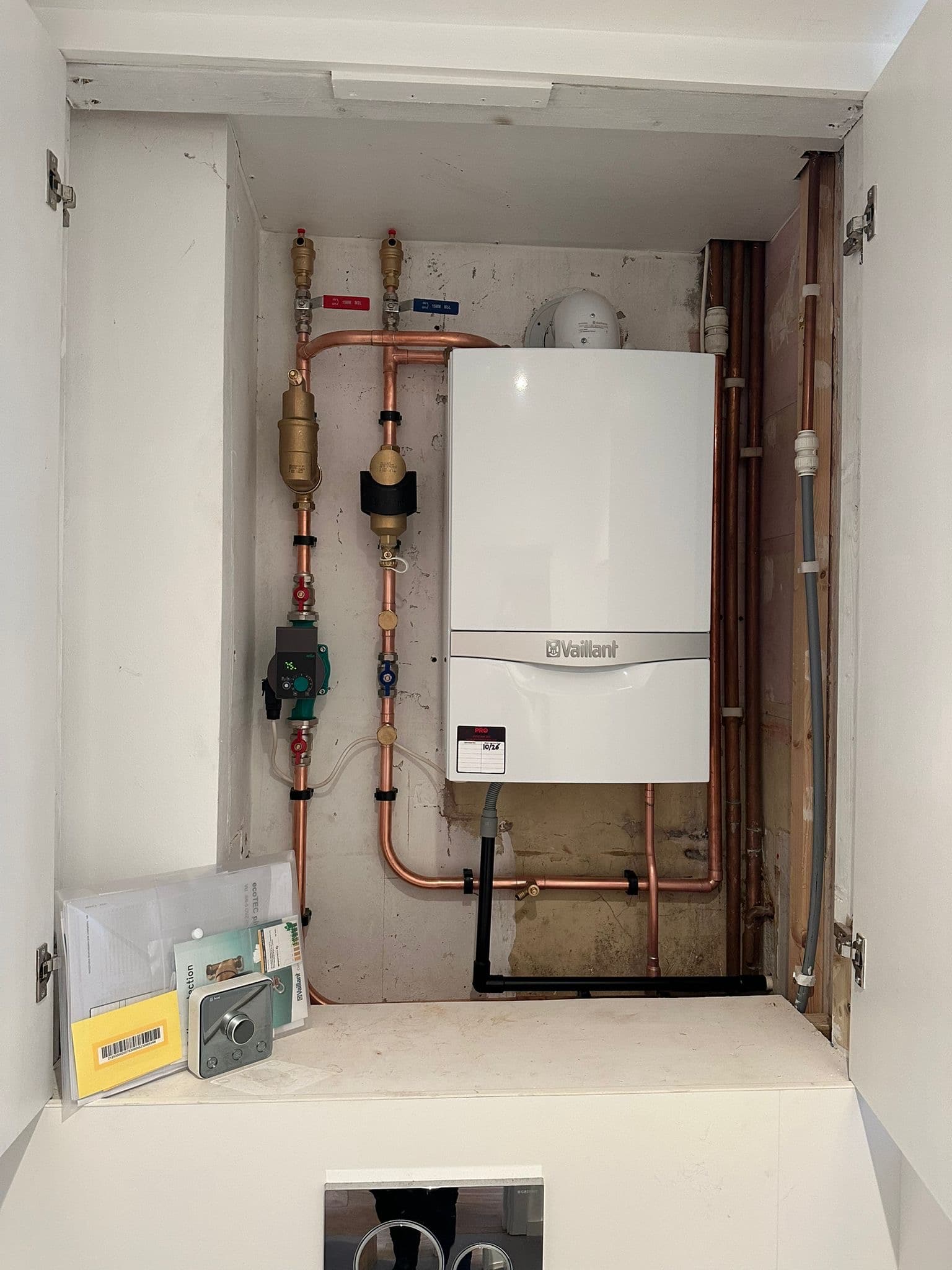
Most sealed systems have a filling loop, usually a silver flexible hose with one or two small valves, often under the boiler or near the pipework. Your boiler manual should show its exact location and how to use it safely.
To top up safely, follow your manufacturer guidance. Typically, this involves opening the small valves slowly until you hear water flowing, watching the gauge rise to around 1.0 to 1.5 bar when cold, then closing both valves firmly. Never leave the filling loop open, and avoid raising the pressure much above the green zone.
Monitor the pressure over the next 24 hours
Once you have topped up, run the heating and hot water as normal. Check the gauge again after an hour, and then 24 hours later. If the pressure has held steady, you may simply have lost pressure from bleeding radiators or previous work.
If it has dropped again, especially back near zero, there is an ongoing problem that needs professional investigation. Repeatedly topping up without fixing the cause can damage the boiler and increase the risk of internal corrosion.
When you should stop and call a Gas Safe engineer
Some warning signs mean you should stop troubleshooting and get expert help straight away. Gas and combustion faults are dangerous to deal with yourself, and some water leaks can quickly cause serious damage.
Pressure drops back down within hours of topping up, or you top up more than once a month
You see water under or inside the boiler, or from a copper pipe outside
The boiler makes loud banging or knocking noises
You notice error codes or lockouts related to pressure or overheating
You smell gas or suspect a carbon monoxide issue (leave the property and call the emergency number immediately)
In these situations, a Gas Safe registered engineer can test the expansion vessel, check the relief valve, look for hidden leaks and ensure the boiler is running safely.
Simple steps to reduce pressure problems in future
Regular care for your heating system can greatly reduce the chances of ongoing pressure loss. It also helps your boiler run more efficiently and last longer.
An annual boiler service allows an engineer to check seals, test safety devices and top up or replace the expansion vessel if needed. Having inhibitor chemical in the system water helps protect against sludge and corrosion, which can lead to leaks and blocked pipes.
Over time, ignoring pressure loss can cause internal components to fail, trigger frequent breakdowns and potentially damage the boiler beyond economical repair. Getting issues checked early is usually cheaper than waiting for a full failure in the middle of winter.
Need help with a boiler losing pressure?
If your boiler is still losing pressure after basic checks, or you are worried about leaks, noises or constant top ups, it is time to bring in a professional. A trained engineer can quickly identify the root cause and advise on the best fix.
For fast help with faults, repairs or active leaks, you can arrange a boiler repair with Pro Plumbers (Kent) Limited . Visit our boiler repair service page for fault-finding and breakdown support, or book an annual check on our boiler servicing page to keep your system in good health.
Other Articles
